The distributor purchases the rights to exhibit a film in theaters and organizes its release: the date, the number of theaters, promotion, and negotiations with theaters. It serves as the link between the producer, who made the film, and the theater operators, who screen it for the public.
In a nutshell
- He acquires the rights to distribute a film, often by paying an advance to the producer.
- He decides on the release date, the number of theaters, and the marketing budget.
- According to the CNC, 812 previously unreleased films were released in theaters in France in 2025.
- In this industry, the minimum monthly gross salary for a programmer is €1,971.42, and that for a distribution director is €4,726.68.
- He usually works for a distribution company, rarely as a freelancer.
What does a film distributor do?
It all starts with acquisition: identifying a film at a festival, at a market, or even at the script stage, and negotiating the rights for France with the producer or seller. The distributor often pays a guaranteed minimum—an advance that the producer receives regardless of the film’s performance and that the distributor then recoups from the box office receipts.
Next comes the release. He chooses the release date based on the competition, determines the number of prints, negotiates with theater owners regarding screens and showtimes, and puts together the marketing campaign: posters, trailers, press coverage, preview screenings, and social media. After the release, he tracks box office receipts week by week and decides whether or not to keep the film in theaters.
The distributor also manages the film’s distribution after its theatrical run.The February 6, 2025, agreement on media release windows establishes the order of release: a film may be released on video and pay-per-view four months after its theatrical release, then on a pay-TV movie channel after nine months, or after six months at the earliest for a service that has signed an agreement with film industry organizations.
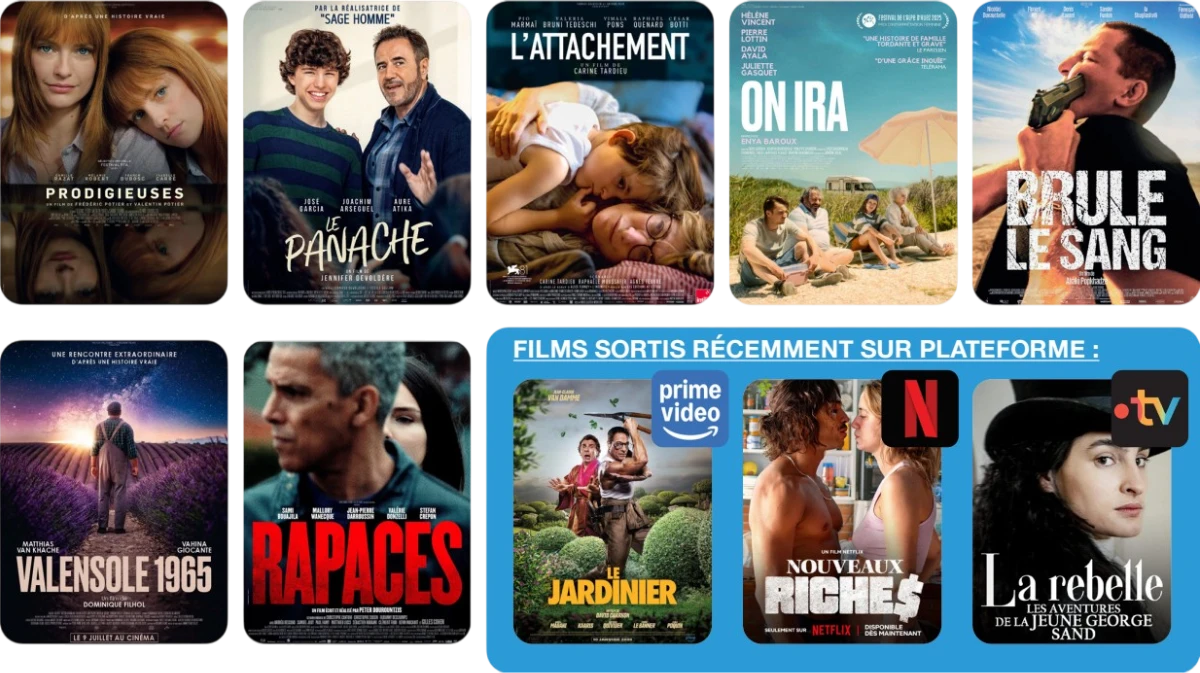
Distributor, producer, or exhibitor: What's the difference?
The producer makes the film and owns the rights to it. The distributor markets it to theaters. The theater owner runs the theater and decides what to show on its screens. The three of them share the proceeds from each ticket sold.
An international sales agent works in a related field: they sell the film to distributors in other countries at markets and festivals. Some companies do both—distribution in France and international sales.
Who does the distributor work with?
He works with producers and distributors to acquire films, and then with theater programmers to secure the best showtimes. Within the company, the programming manager negotiates with theaters, the marketing team prepares the campaign, and the sales department sells the film to networks and streaming platforms.
It also relies on external service providers: publicists, creative agencies for posters and trailers, and labs for digital prints.
What skills do you need to become a distributor?
First, you have to know how to assess a movie and its audience: get a sense of what might work—and for whom. You also have to have a good grasp of the numbers, because every release is a financial gamble: acquisition cost, distribution costs, and the number of tickets sold needed to break even.
Finally, the job requires a true knack for negotiation—with both producers and theater owners—a solid understanding of the theater network and release schedules, and proficiency in English, which is essential in international markets.
How much does a distributor earn?
In distribution companies, minimum salaries are set by position. A senior programmer earns a minimum of €1,971.42 gross per month, a programming manager earns €2,991.12, and a distribution director earns €4,726.68.
| Position | Level | Minimum Gross Monthly Wage |
|---|---|---|
| Programming Assistant | Junior, employee | €1,766.93, adjusted to the minimum wage: €1,867.02 |
| Acquisitions Manager | Junior, supervisor | 1 955,97 € |
| Programmer | Experienced, supervisor | 1 971,42 € |
| Programming Manager | Experienced, executive | 2 991,12 € |
| Programming or Sales Director | Frame | 4 201,38 € |
| Director of Distribution | Expert, executive | 4 726,68 € |
These amounts are based onthe agreement of October 23, 2023, regarding minimum wages under the collective bargaining agreements for film distribution (IDCC 892 and 716), which was extended by an executive order dated December 18, 2023. The minimum wage for a programming assistant is currently lower than the national minimum wage (SMIC), which has been €1,867.02 gross per month since June 1, 2026; therefore, the SMIC applies. These are minimum wages, which can be negotiated upward.
The market is demanding. According to the CNC’s 2025 report, French theaters recorded 156.2 million admissions in 2025—a 14% decrease from the previous year—for 812 new film releases, an increase of 9.3%. French films accounted for 37.9% of admissions. Consequently, more films are competing for fewer viewers, making each release riskier.
What kind of education do you need to work in retail?
The distribution sector primarily recruits candidates with a background in film economics, marketing, or law, who also have a deep understanding of film culture. People often start out with an internship or an assistant position in programming, marketing, or acquisitions.
At ESRA, the DHEC Production and Distribution program is a two-year program following a three-year bachelor’s degree, leading to a state-accredited “ degree ” degree equivalent to a five-year master’s degree. With more than 700 hours of instruction per year, it covers financing, marketing, legal matters, distribution, and international co-production, using real-world case studies. Among DHEC alumni, Arthur Pawlowski (class of 2018) is a distributor at Universal Pictures, and Tom Abrami (class of 2017) is head of programming at Universal Studios France.
What career opportunities and prospects are there?
Employers include distribution companies—ranging from large corporations to independent distributors specializing in arthouse films—as well as international sales agents, streaming platforms, and television networks that purchase films. Entry-level positions are available in programming, marketing, acquisitions, or sales administration.
Career paths often lead to roles in programming, marketing, or acquisitions, and eventually to distribution management. Some go on to start their own companies, often specializing in a particular genre or type of film.
Sources: Légifrance, agreement of October 23, 2023, regarding minimum wages in film distribution, and agreement of February 6, 2025, on media chronology; CNC, 2025 annual report; minimum wage as of June 1, 2026. Verified on September 24, 2026.
Frequently Asked Questions
What does a film distributor do?
He purchases the rights to distribute a film in theaters, selects its release date and the number of theaters, negotiates with theaters, and organizes the promotional campaign. He then manages the film’s run on other screens.
How much does a distributor earn?
According to the October 23, 2023, agreement on film distribution salaries, the minimum gross monthly salary is €1,971.42 for a senior programmer, €2,991.12 for a programming manager, and €4,726.68 for a distribution director.
What is the difference between a distributor and an operator?
The distributor markets the film to movie theaters. The theater operator manages the theater and decides on its lineup. Together with the producer, the two share the proceeds from each ticket sold.
How long after its theatrical release does a movie become available on VOD?
Under the February 6, 2025, agreement on media release schedules, a film may be made available on video and on a pay-per-view basis four months after its theatrical release. This period may be reduced by up to four weeks for films that meet certain box office performance criteria.
What is a guaranteed minimum?
It is an advance that the distributor pays to the producer to acquire the rights to a film. The producer keeps it regardless of the film's performance, and the distributor recoups it from the box office receipts before paying out the remainder.
What kind of education do you need to work in film distribution?
A degree in film economics, production, or cultural marketing is the most common path. At ESRA, the DHEC in Production and Distribution is a two-year program that, following a three-year bachelor’s degree, prepares students for a state-accredited five-year master’s degree ( degree ).
The other cinema jobs

Director of Photography


Production and Distribution

Film Directing,
Series and TV
Programs offered at ESRA Paris
The school offers post-baccalaureate Programs in all three audiovisual fields. These Programs award a state-approved degree recognized by the French Ministry of Higher Education and Research.
Producer, Director, Editor
Audiovisual, Sound Systems, Music,
Radio, Video Games
Animation, 3D Compositing & VFX, Management & Production, Modeling
Master's-level Programs also on offer
Develop your technical and creative skills in the film industry with the Master DHEC, a state-approved degree .
To become a film producer, distributor, programmer, seller or buyer
Audiovisual, Live, Music,
Radio, Sound Design
DHEC Filmmaking
in English
To manage the entire production of a project: script writing, locations, casting...