When choosing a film school, first check what the degree is worth: degree national, degree state-approved, RNCP accreditation, or simply the school’s degree . Then compare the total cost, the number of films produced, the equipment, the faculty, and the career placement rates of alumni, along with how these figures are calculated. No official ranking does this for you.
ESRA Editorial Team, information verified on November 3, 2026, with Onisep, Parcoursup, France Compétences, service-public.fr, etudiant.gouv.fr, Légifrance, the CIDJ, the DGCCRF, the CPNEF for the audiovisual sector, La Fémis, and the ENS Louis-Lumière.
4-channel
BTS, a bachelor's degree at a university, a private school, and—after two years of study—national schools that require entrance exams.
Parcoursup
A private, non-contractual educational institution is listed here only if it is recognized by the government. Application period: January 18 through March 11, 2027.
degree referred to
The mark of a private school recognized by the government. Check France Compétences, where the certification must be active.
Insertion
A rate is only meaningful when accompanied by the date it was measured, any promotions, and the definition of “currently employed.”
Table of Contents
- What film studies programs are available after high school?
- How can you tell how good the degree is?
- What does being listed on Parcoursup guarantee?
- How much does film school cost?
- How should we evaluate the teaching methods and materials?
- What career opportunities are there, and how do you interpret an employment rate?
- What pitfalls should you avoid?
- What about ESRA Cinema?
- Frequently Asked Questions
What film studies programs are available after high school?
After high school, there are three paths leading to careers in film and the audiovisual industry: the BTS, a bachelor’s degree at a university, and private film schools. National film schools, such as La Fémis or the ENS Louis-Lumière, admit students later, generally after two years of higher education.
| Track | Duration | Admission | Cost | degree |
|---|---|---|---|---|
| BTS in Audiovisual Professions, 5 tracks | 2 years | Parcoursup, based on application materials | Free admission for the general public | degree national, 2 years of post-secondary education |
| Bachelor's Degree in Film and Audiovisual Studies at the university | 3 years | Parcoursup, non-selective | €178 per year in 2026–2027 | degree national, 3-year degree |
| Private school | 3 to 5 years | Admissions exam or school application, plus a Parcoursup application if the school is listed on the “ degree ” list | An average of 7,000 € per year, according to Onisep | degree relevant certification, RNCP designation, or school- degree , depending on the program |
| La Fémis, ENS Louis-Lumière | 4 years (Fémis), 3 years (Louis-Lumière) | Entrance exam after two years of higher education, with an age limit | €458 per year (Fémis, 2025–2026); €300 per year (Louis-Lumière, 2025–2026) | Master's degree, 5 years of higher education |
The BTS offers five specializations: visual media, audio production, editing and post-production, production management, and engineering and equipment operation (Onisep). For national schools, the requirements are based on the application guidelines for the 2026 La Fémis admissions exam (the 2027 guidelines are scheduled to be announced in mid-November) and the regulations for the 2027 ENS Louis-Lumière admissions exam. In 2026, La Fémis required applicants to be under 27 years of age as of January 1; an alternative pathway was available to applicants under 30 who held a high school diploma and could demonstrate two years of professional experience. For 2027, the ENS Louis-Lumière requires applicants to be under 27 years of age as of December 31, 2026. Both schools award a “ degree ” conferring a master’s degree (Onisep, La Fémis; Onisep, Louis-Lumière).
How can you tell how good the degree is?
A degree 's name alone isn't enough to tell you how good they are. Ask for the exact title of their degree, then check its accreditation yourself.
- degree national (BTS, bachelor's degree): awarded by the government.
- degree Approved: degree of a private school, inspected and approved by the Ministry of Higher Education for a limited period.
- RNCP Title: Professional certification registered by France Compétences, including a level and an expiration date.
- degree school-issued: issued by the school. It is recognized by the government only if it is also endorsed or registered with the RNCP.
There are two common pitfalls. The term “bachelor’s degree” is not protected: according to the CIDJ, “any school can offer it.” And a certification advertised as “pending registration” with the RNCP is not yet official: when questioned by the CIDJ, France Compétences warns, “you should consider this certification nonexistent.”
To verify this, search for the program on France Compétences: the certification must be “active,” and the institution must be authorized to offer preparation for it. On Parcoursup, the labels displayed on a program’s page indicate the type of oversight exercised by the government. Details on the differences between “visa,” “grade,” and “RNCP” can be found in our article on the “ degree ” visa, grade, and RNCP designation.
What does being listed on Parcoursup guarantee?
Listing on Parcoursup serves as an initial screening process. According to Parcoursup, private “ Programs ” that are not under contract with the government “must be accredited by the government,” which is “an essential requirement for being listed on the platform.”
The reverse is also true: a private undergraduate program whose “ degree ” has been approved by the government must be listed on Parcoursup (decree of November 19, 2021). A school that advertises an approved “ degree ” without being listed on Parcoursup therefore warrants further inquiry.
The 2027 Schedule (Parcoursup):
- December 17, 2026: Launch of the " Programs " card;
- January 18 through March 11, 2027: registration and course selections;
- April 1, 2027: the last day to complete the application and confirm your preferences;
- June 1, 2027: initial responses;
- July 10, 2027: End of the main phase.
Some schools hold their own entrance exams. Be sure to check the dates and fees for these exams, which are in addition to the Parcoursup application.
How much does film school cost?
The cost ranges from free tuition at a public BTS program to several thousand euros per year at a private institution.
In public schools, the BTS is free (Onisep), and the bachelor’s degree costs €178 per year in 2026–2027 (service-public.fr). At private audiovisual schools,Onisep reports an “average of €7,000 per year.”
To compare two schools, ask:
- the total cost of the entire program, not just the first year;
- What's included: equipment, filming, insurance, software;
- what is not included: transportation and lodging on set, membership dues;
- Contract terms: payment schedule, cancellation, refund.
Students enrolled in a higher education institution also pay the CVEC, which will be €105 in 2026–2027. CROUs scholarship recipients are exempt from this fee, and students enrolled in BTS programs at high schools are not required to pay it (etudiant.gouv.fr). To receive a CROUs scholarship, you must be enrolled in “a public or private educational institution authorized to accept scholarship recipients” (service-public.fr): check with your school.
How should we evaluate the teaching methods and materials?
You learn filmmaking by shooting. A brochure isn't enough: ask for the numbers and go check it out.
Hours
How many hours of instruction per year, and what percentage of that is supervised practice?
Movies
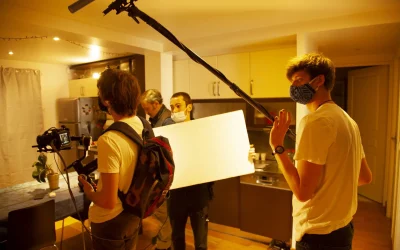
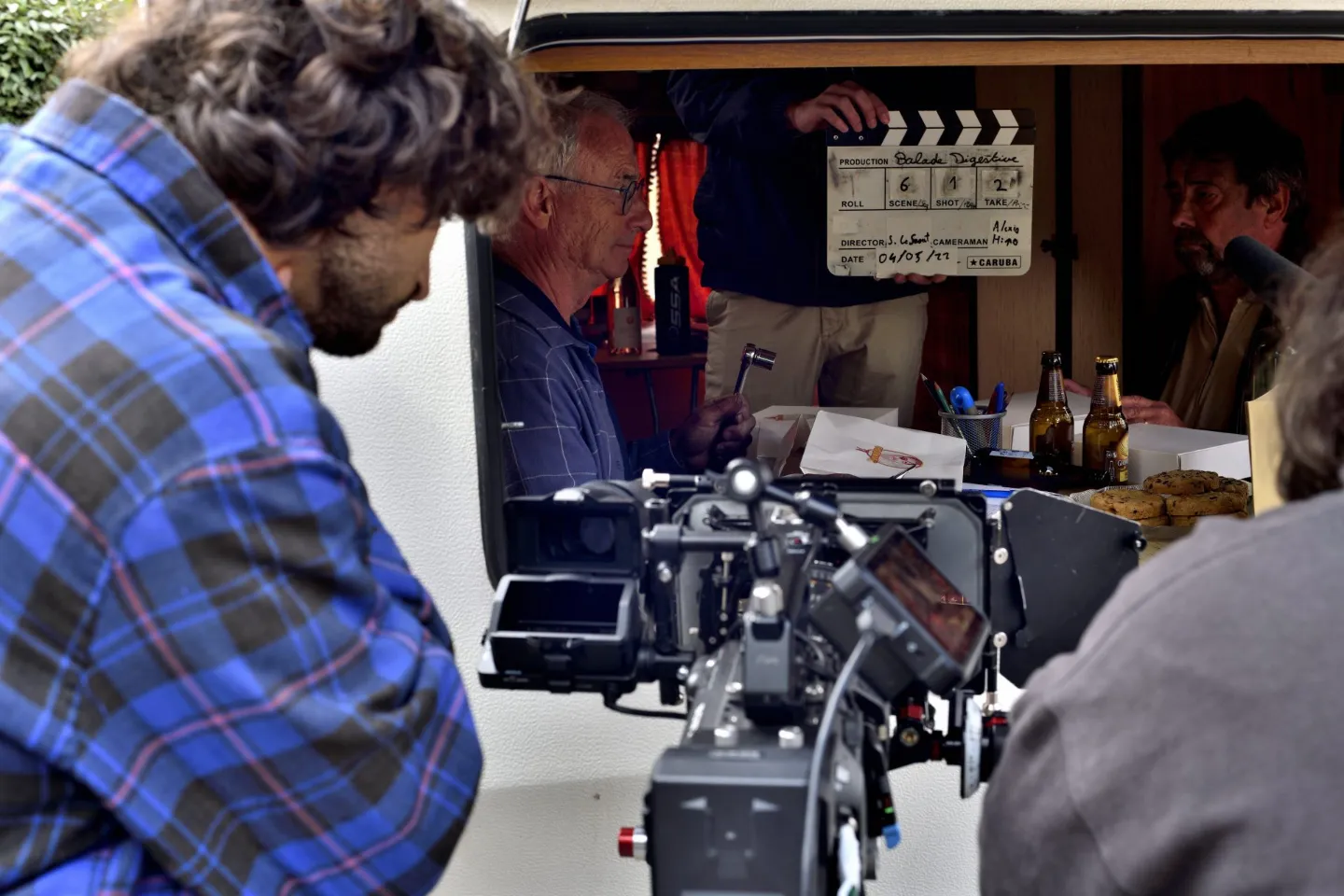
How many films does each student make, in what roles, and who evaluates them?
Equipment
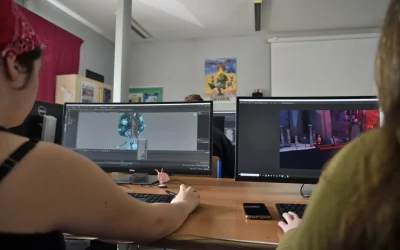
What cameras, sets, editing suites, and mixing rooms are available, and are they accessible outside of class?
Speakers
Who teaches: practicing professionals—on which films or programs?
Internships
How many weeks of internships are required, when do they take place, and does the school help students find them?
Specialization
When do students choose a major, and which ones do they choose from?
Onisep summarizes the key points to consider before making a decision: “facility availability, degree degree , and career paths of alumni.” An open house provides an opportunity to tour the facilities and talk to students.
What career opportunities are there, and how do you interpret an employment rate?
The film and audiovisual industries employ a large number of people, but mostly on short-term contracts.
According to Audiens data published by the CPNEF for the audiovisual sector, the industry had 225,000 employees in 2024, 67% of whom were on standard fixed-term contracts—the type of contract typically used by intermittent workers. As a result, careers often begin on a project-by-project basis: we explain the rules in our article on intermittent work.
An employment placement rate is only as good as the method used to measure it. Ask:
- the date on which it is measured: six months, one year, or two years after the degree ;
- which promotions, and with what response rate;
- what the school calls “in a position”: a designated in the industry , in the field, or any job.
Also check out what the veterans are up to: their roles, their movies, and their opening credits.
What pitfalls should you avoid?
During an investigation conducted in 2020 and repeated in 2021, the DGCCRF inspected 80 private higher education institutions: more than 56% were found to have irregularities, and more than 30% engaged in deceptive business practices. Among the practices identified were:
- praise “lacking any verifiable basis”;
- fake crossed-out prices;
- reviews posted by employees of the establishment;
- the terms “bachelor’s degree,” “master’s degree,” or “doctorate” used without authorization.
Be sure to read the contract before signing it. Among the unfair terms, the CIDJ cites the one in which the school reserves the right to “unilaterally modify the terms regarding the contract’s duration.” And check the institution’s legal name, which “may differ” from its trade name.
What about ESRA Cinema?
ESRA Cinéma offers a three-year program in film and audiovisual professions in Paris, on the French Riviera, and in Rennes.
degree. The DESRA (degree , or Higher Education Diploma in Audiovisual Production) is accredited by the Ministry of Higher Education, Research, and Space at the bac+3 level and registered with the RNCP at Level 6 for the Paris, Côte d’Azur, and Rennes campuses (RNCP code 41242). Admission to the first year is through Parcoursup and the school’s entrance exam, which is open to all high school graduates, regardless of academic record (Diplomas and Parcoursup).
The curriculum. More than 700 hours of instruction per year and at least two production projects per year, supervised by professionals from the writing stage through to the screening before a jury. After two years of core courses, students choose a specialization: film directing, television series directing, broadcast directing, cinematography, production, or editing.
Cost. In 2027–2028, the first year costs between €9,050 and €9,700 depending on the campus, including enrollment fees, payable in one, three, or five installments with no additional fees (ESRA Cinema Brochure 2027–2028).
Further Reading
The program, majors, and campuses
The State Visa and the Admission Process
Upcoming dates at each campus
Frequently Asked Questions
What is the best film school in France?
There is no official ranking. Media rankings each follow their own criteria. Instead, compare the recognition given to the degree, the total cost, the number of films produced, the equipment, and the employment prospects for alumni, along with its calculation method.
Can you enroll at La Fémis right after graduating from high school?
No. For the 2026 general competitive exam, applicants had to have completed two years of higher education and be under 27 years of age as of January 1, or—for those under 30—have a high school diploma and two years of professional experience. The 2027 eligibility requirements are scheduled to be announced in mid-November 2026.
How much does film school cost?
The BTS is free at public schools, and the bachelor’s degree costs €178 per year for the 2026–2027 academic year. At private audiovisual schools, Onisep reports an average cost of €7,000 per year. Always ask for the total cost of the entire program.
How can you tell if a private film school is accredited by the government?
Ask for the exact name of the program ( degree ) and verify it on France Compétences, where the certification must be active. A private, non-contract-based program appears on Parcoursup only if it is recognized by the government, and an undergraduate program with a designated “ degree ” must be listed there.
Do you need a specific high school diploma to attend film school?
Generally speaking, no. The BTS and bachelor’s degree programs are open to students who have earned a high school diploma; for the bachelor’s degree, ONISEP recommends a general high school diploma. Some schools admit students through an entrance exam open to all high school graduates, regardless of their academic record: this is the case at ESRA.
Sources
- Onisep, BTS in Audiovisual Professions
- Onisep, “The Structure of BTS and BTSA Programs,” October 19, 2026
- Onisep, Bachelor's Degree in Film and Audiovisual Studies
- Onisep, “Audiovisual Schools,” September 17, 2026
- Service-public.fr, “College: How Much Will Tuition Be in 2026?”, August 21, 2026
- La Fémis: Application Guidelines for the 2026 General Admissions Exam
- La Fémis, General Entrance Exam
- Onisep, La Fémis's " degree " program, specializing in filmmaking
- Onisep, “ degree ” from the ENS Louis-Lumière, specializing in film
- ENS Louis-Lumière, 2027 Admissions Rules
- ENS Louis-Lumière, 2026 Admissions Brochure
- Parcoursup, “What types of Programs s are available on Parcoursup?”
- Parcoursup, 2027 Schedule
- Decree of November 19, 2021, regarding the “ Programs ” of private institutions on Parcoursup
- Etudiant.gouv.fr, CVEC 2026–2027
- Service-public.fr, scholarships based on financial need
- France Compétences, “How to Verify the Official Recognition of Your degree ”
- CIDJ, “Private Higher Education: What You Need to Know to Make the Right Choice,” January 2, 2026
- DGCCRF, “Private Higher Education Can Do Better”
- CPNEF for the Audiovisual Sector, 2024 Statistical Profile (Audiens data)
- France Compétences, RNCP entry 41242 (DESRA)