Established in 1994, ESRA’s Professional Training Department builds on the school’s founding mission: to provide training for careers in film, audiovisual media, and sound, while remaining closely attuned to the realities of the industry.
For more than 30 years, he has developed recognized expertise in supporting adults who are advancing in their careers or changing career paths. He works with a diverse range of individuals—employees, contract workers, self-employed professionals, and job seekers—who wish to acquire new skills, specialize, or reposition themselves professionally.
In 2025, the ESRA Group expanded its presence in continuing education by acquiring DIXIT, a well-established organization in the fields of film and audiovisual media. This development has enabled the group to broaden its offerings and provide complementary programs in line with the sector’s evolving landscape.
The training program is now organized around two complementary approaches:
Esra Professional Training
An offering focused on Programs certificatePrograms and Programs technicalPrograms .
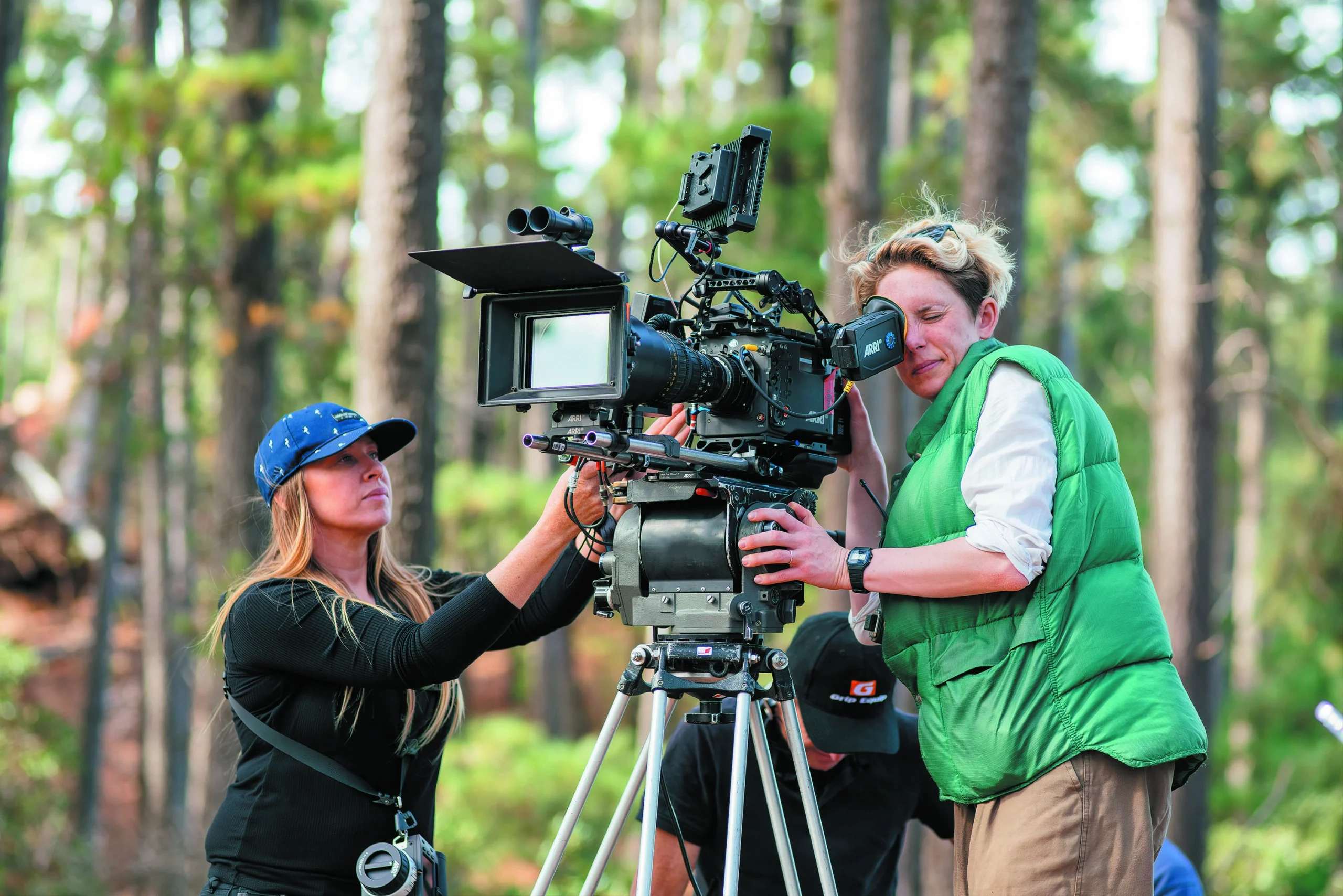
These programs enable students to learn a trade (camera operator, production manager, video editor, etc.) or develop practical skills through a curriculum based on hands-on learning, real-world simulations, and the use of professional equipment.
Check out the Programs FORMATION PRO Programs offerings now.

Dixit
A selection of Programs focused on issues in the film and audiovisual industries, enabling professionals to deepen their understanding of these ecosystems, develop their projects, and navigate the evolution of their careers.
Access DIXIT's training offerings now.
All of our Programs led by active professionals who are recognized experts in their fields, ensuring that participants gain direct insight into the industry’s expertise, practices, and realities.
All of these initiatives are designed in close alignment with industry trends in order to meet the market’s specific needs and support changes in the workplace.
Through this organizational structure, the ESRA Group reaffirms its commitment to offering a rigorous continuing education program that is grounded in real-world experience and focused on employment, while supporting each learner in building and succeeding in their career path.

Quality teaching staff
made up of working professionals

Network of over 15,000 alumni
inspiring careers in the film and audiovisual industries

A modern campus
promoting innovation and collaboration, bringing together all the professions of audiovisual: Cinema, Sound and Animation
Do you have any questions?
We'll be happy to help you with your enrolment procedures or your search for financing.
What's the difference between vocational training and initial training at ESRA?
Vocational training (or continuing education) is aimed at adults (+18 years of age) in employment or undergoing retraining employees, jobseekers, casual workers, the self-employed... It aims to acquire new skillsspecialize or change professions.
It often takes place over a shorterwith formats adapted to a variety of career paths. Financing can be provided via the CPF, AFDAS, France Travail, etc.
Conversely initial training is mainly aimed at post-baccalaureate studentsstudents, as part of a multi-year diploma course. It involves a more traditional academic rhythm (university year) and personal or family financing.
In a nutshell :
Initial training = student, long course, degree
Professional training = adult retraining or skills upgrading, shorter course, certification
Are ESRA Pro Programs recognized?
Yes, our professional certification Programs are registered with the Répertoire National des Certifications Professionnelles (RNCP). This means they are recognized by the State and meet the quality and employability standards defined by France Compétences.
This recognition enables :
- public funding (CPF, AFDAS, France Travail, etc.);
- an official value on the job market, with a precise level of qualification
All our certifying Programs are detailed in the program sheets, with their associated RNCP level.
Can I follow the Programs remotely?
ESRA Formation Pro's long term certification Programs are mainly delivered in-class, on our Paris, Nice and Rennes campuses.
This pedagogical choice guarantees total immersion in professional audiovisual practices, access to technical equipment and supervised teamwork.
Are Programs accessible to people undergoing retraining?
Absolutely. ESRA Formation Pro supports many people in career transition, whether or not they come from an audiovisual background. Our Programs include guidance and integration into the industry.
What are the prerequisites for applying?
Each course has its own criteria (experience, degree, specific skills). These are specified on each course sheet, under the heading "Intended audience and prerequisites".
To ensure that your project corresponds to the training course, a positioning interview will be carried out. This will enable us to assess your motivations and skills, and guide you towards the course best suited to your profile.
How far in advance do I need to register?
You can submit your application as soon as the session dates are posted on the site, so you can guarantee your place and prepare your project with peace of mind.
For certain funding procedures, such as the Projet de Transition Professionnelle (PTP), it is necessary to register at least 4 months before the start of the training course. This period is essential to complete the admission process, put together the file and have it validated by the funding bodies.
For other types of funding, such as CPF, AFDAS or Pôle emploi, we advise you to submit your application at least 6 weeks before the training course, to guarantee that your training will be covered.
As places are limited, we recommend that you register as early as possible to maximize your chances of joining the desired session.
I'm a student, can I join ESRA Formation Professionnelle?
Yes, ESRA Formation Professionnelle is open to students aged 18 and over, regardless of their initial training. We welcome students wishing to specialize, retrain or complete their training in the audiovisual professions.
The most important thing is that your career plan is coherent and well-defined. To achieve this, we carry out a positioning interview to help you choose the course best suited to your objectives.
How can I finance my training? Can I use my CPF?
Yes, several financing solutions exist: CPF, AFDAS, Pôle emploi, OPCO, employer's training plan, regional aid, personal financing...
To find out more, we invite you to consult our page dedicated to financing solutions, where each scheme is detailed according to your profile.
Our team will help you choose the right system and prepare your application.
Do you offer payment facilities?
Yes, if you're financing your training yourself, we offer payment plans at no extra cost. This solution should be discussed with our team at the time of registration.
Please note: if you are using your Compte Personnel de Formation (CPF), payment is made directly via the official MonCompteFormation.gouv.fr platform. In this case, no instalments are possible: payment is managed in a single instalment by the system.
Who can help me put together my financing application?
Our team is with you every step of the way:
- Identify the right scheme for your status (employee, intermittent worker, job seeker, self-employed, etc.),
- Verification of training eligibility,
- Preparing the file: estimate, program, schedule, supporting documents...
- Follow-up of procedures on dedicated platforms (Mon Compte Formation, Pôle emploi, AFDAS...).
We'll help you put together a solid application and meet the funding bodies' deadlines.
Do I have to pay in advance if I use Pôle Emploi or AFDAS financing?
No. When your application is accepted by Pôle emploi / France Travail, AFDAS or another public funding body, the training costs are paid directly by the organization and transferred to ESRA. So you don't have to pay anything up front, provided your application has been validated in advance and unless otherwise specified in your agreement. Our team will help you put together your application and meet the deadlines for validation.
Please note that the administrative handling fee of €95 remains at your expense, unless otherwise indicated. These fees are clearly indicated when you register.
Where do ESRA Pro Programs take place?
Programs take place on our premises in Paris, Nice and Rennes, depending on the session. Each training sheet specifies the campus concerned. Each site hasprofessional equipment and teaching studios to guarantee hands-on immersion in the audiovisual professions.
What is the training schedule (intensive, full-time, part-time)?
The majority of our professional certification Programs run full-time, generally from Monday to Friday, to guarantee complete immersion in industry practices. The precise pace is indicated on the course description.
Are there any internships or work placements?
Yes, depending on the program, our long-term certification Programs can include work experience, through supervised group projects, practical exercises in real-life conditions, workshops with industry professionals and internships. These experiences enable participants to gain hands-on experience, develop their network and actively prepare for professional integration.
Details are provided in each training sheet.
What are the assessment procedures?
Depending on the course, skills are assessed continuously throughout the course, through :
- practical exercises,
- professional role-playing,
- individual or group projects,
- orals or presentations before a jury.
These assessments are used to validate the acquisition of the blocks of skills required for certification.
The precise assessment procedures are detailed in each program sheet, in line with the reference framework for the targeted certification.
Will I get a degree or certification at the end of the course?
Yes, Programs marked as certifying lead to state-recognized professional certification, registered in the Répertoire National des Certifications Professionnelles (RNCP). This certification is issued once all the skills and requirements of the course have been validated.
These certifications add value to your skills and facilitate your integration or professional development.
Do I have to do an internship as part of my training?
It all depends on the course. For long Programs leading to certification, an internship or work placement is often compulsory to guarantee real immersion in the industry. Each course sheet specifies the terms and conditions of internships.
How do you go about finding an internship?
ESRA Formation Pro supports you throughout your training in your search for internships, offering you personalized advice, a network of professional partners and tools to enhance your application. We can also help you prepare for interviews and formalize your internship agreement.
How long does the training course last?
The length of the internship depends on the course and program requirements. In general, long training courses last several weeks, often a minimum of 8 weeks, to guarantee complete professional immersion. Specific details are given in each course description.
When should I start looking for my internship?
We advise you to start looking for an internship as soon as you begin your training, or even before if you wish, to maximize your chances of finding a suitable host organization. Our team will be with you from the start of your training to guide and support you in this process.
What are the job and career prospects after training?
ESRA Formation Pro trains students for real-world, high-demand jobs in the audiovisual, film, production and post-production sectors. Our Programs are designed to meet real market needs, resulting in a high rate of professional integration.
We also support our trainees in their career transition or development projects, with personalized follow-up to facilitate their integration into the sector.
To find out more about the jobs available, consult our job descriptions.
Can I join the initial ESRA after a professional training course?
Initial training and vocational training are distinct paths, but it is sometimes possible to consider a gateway depending on your career plans and previous experience. Each situation is studied on a case-by-case basis, and our team can support you in this process.