The producer selects projects, raises the funds to finance them, and assumes the financial risk of the film. The producer hires the director and crew, oversees the budget, and arranges for the film’s release through distributors, networks, streaming platforms, and festivals. In most cases, the producer runs their own production company.
In a nutshell
- He develops projects, secures funding, and oversees the film from start to finish.
- He usually runs a production company that employs the film crew.
- There is no minimum wage scale for his position: his compensation depends on the films he produces.
- According to the CNC, 290 films were approved in 2025, including 228 produced in France.
- ROME Code: L1302, audiovisual and film producer. France Travail classifies this as an executive position.
What does a producer do?
It all starts with development. The producer identifies a screenplay, an idea, or a book to adapt, acquires the rights, and works with the screenwriter and director on the writing process. According to France Travail, the producer selects screenplays, seeks out and secures funding, assembles the production teams, and oversees production through to broadcast.
Film financing comes from several sources: television networks, streaming platforms, public funding such as that provided by the CNC and regional governments, distributors, and foreign co-producers. The producer puts together the financing plan, negotiates the contracts, and commits the production company to the budget.
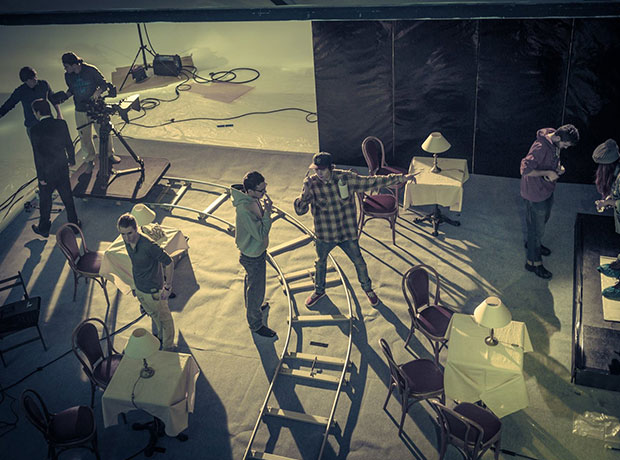
During production, he entrusts the organizational aspects to the production manager and oversees filming and post-production. Once the film is completed, he works with the distributor to prepare for its release and distribution.
Producer, executive producer, or production manager: What's the difference?
The producer is responsible for the project and bears the financial risk. The executive producer oversees the production of the film on behalf of a producer, often for a foreign production being filmed in France. The production manager is an employee of the film: he or she prepares the budget, organizes the shoot, and manages the crew within the established budget.
The producer also works with the distributor, who purchases the rights to release the film in theaters and handles its promotion.
Who does the producer work with?
He works with the writers, the screenwriter, and the director, championing their project. He negotiates with funding sources: TV networks, streaming platforms, the CNC, regional governments, banks, and co-producers.
Within his company, he relies on staff members in development, production, and administration. For the film, he delegates production to the production manager and then works with the distributor and international sales representatives.
What skills do you need to become a producer?
You need to know how to read a screenplay and identify a project that will find an audience. You also need to understand the financing mechanisms for film and television, copyright law, contracts, and business management.
Above all, this profession requires tenacity: it often takes several years to secure funding for a film. Strong negotiation skills and a solid network—among both writers and financiers—are essential.
How much does a producer earn?
Producers usually run their own production companies: their compensation depends on the films they produce and their success. The salary scale in the collective bargaining agreement for film production sets the minimum wages for technicians, but does not include a position for producers.
To provide some context for the sector, here are the key public indicators for production and the labor market:
| Landmark | Value | Source |
|---|---|---|
| Films Approved in 2025 | 290, including 228 initiated by France (309 in 2024) | CNC, Film Production Observatory |
| Investments in these films | 1.37 billion euros, down 4.8% | CNC |
| Average Cost of a Film | 4.89 million euros | CNC |
| Production Job Openings Over a 12-Month Period | 150 job openings for 3,940 job seekers | France Travail, ROME code L1302, second quarter of 2026 |
| Salary offered in 80% of job postings | Between €1,802 and €2,692 gross per month | France Travail, Second Quarter 2026 |
The production figures come fromthe CNC’s Film Production Observatory, published on March 18, 2026. The market figures come from France Travail’s L1302 report: 3% of new hires are on permanent contracts, and 90% of fixed-term contracts last less than one month.
What kind of education do you need to become a producer?
France Travail states that entry into this profession requires a two- to five-year post-secondary degree ( degree ) in audiovisual and film production or in cultural administration and management, or professional experience in film or television. Many producers start out as assistants or production coordinators.
At ESRA, the ESRA Cinema program is a three-year course leading to a state-accredited “ degree ” degree at the Bac+3 level, with more than 700 hours of instruction per year and at least two productions per year, which are screened before a jury. In the third year, the production specialization focuses on organizing a film shoot, from management through to final delivery. The DHEC in Production and Distribution extends this program to a state-accredited “ degree ” degree at the Bac+5 level.
What career opportunities and prospects are there?
Producers work in feature films, television dramas and documentaries, animation, advertising, and music videos. They often reach this position after several years as a production coordinator, production manager, or associate producer, before starting or taking over a company.
Among ESRA alumni, Yves Darondeau (ESRA 1986) produced Luc Jacquet’s *March of the Penguins*, which won the Oscar for Best Documentary Feature in 2006.
Sources: CNC, Film Production Observatory, 2025; France Travail, ROME code L1302; Légifrance, collective bargaining agreement IDCC 3097, pay scale as of May 1, 2026; Academy of Motion Picture Arts and Sciences. Verified on October 2, 2026.
Frequently Asked Questions
What does a film producer do?
He selects projects, secures funding, hires the director and crew, oversees the budget, and organizes the film’s release. He bears the financial risk of the film.
How much does a producer earn?
There is no set minimum salary for producers, who most often run their own companies: their compensation depends on the films they produce. According to France Travail, 80% of production job openings offer between €1,802 and €2,692 gross per month.
What is the difference between a producer and a production manager?
The producer is responsible for the project and its financing. The production manager is an employee of the film production company who prepares the budget and organizes the shoot within the established budget.
How many movies are produced in France each year?
According to the CNC, 290 films were approved in 2025, including 228 French-produced films, representing 1.37 billion euros in investment.
What kind of education do you need to become a producer?
According to France Travail, a two- to five-year post-secondary degree ( degree ) in audiovisual and film production or cultural management, or professional experience in film or television.
How do you become a producer?
Often after several years as an assistant, production manager, or executive producer, before starting or taking over a production company.
The other cinema jobs

Director of Photography


Production and Distribution

Film Directing,
Series and TV
Programs offered at ESRA Paris
The school offers post-baccalaureate Programs in all three audiovisual fields. These Programs award a state-approved degree recognized by the French Ministry of Higher Education and Research.
Producer, Director, Editor
Audiovisual, Sound Systems, Music,
Radio, Video Games
Animation, 3D Compositing & VFX, Management & Production, Modeling
Master's-level Programs also on offer
Develop your technical and creative skills in the film industry with the Master DHEC, a state-approved degree .
To become a film producer, distributor, programmer, seller or buyer
Audiovisual, Live, Music,
Radio, Sound Design
DHEC Filmmaking
in English
To manage the entire production of a project: script writing, locations, casting...