The director of photography, also known as the cinematographer, works with the director to create the visual style of a film. He or she selects the camera and lenses, designs the lighting for each scene, and directs the camera, lighting, and rigging crews. He or she then oversees the color grading process until the final image is achieved.
In a nutshell
- It conveys the director's intentions through lighting, framing, and color.
- He supervises three crews: camera, electricians, and stagehands.
- For a feature film, the minimum wage is €2,758.11 gross per week, based on a 39-hour workweek.
- The César Award for Best Cinematography has honored this craft since the first ceremony in 1976.
- ROME Code: L1505, camera operator.
What does a cinematographer do?
During pre-production, he reads the script and works with the director to define the film’s visual style: natural or highly staged lighting, colors, aspect ratio, and camera movements. He selects the camera and lenses, conducts test shoots at the rental company, and scouts locations to plan the lighting for each location, hour by hour.
On set, he sets up the lighting for each shot with the chief electrician, decides on camera movements with the chief grip, and adjusts the exposure. On many films, he operates the camera himself; on the biggest productions, he hands the camera over to a cameraman and focuses on the lighting.
After filming, he works with the colorist to set the film’s final colors and contrasts, shot by shot.
Director of Photography or Camera Operator: What's the Difference?
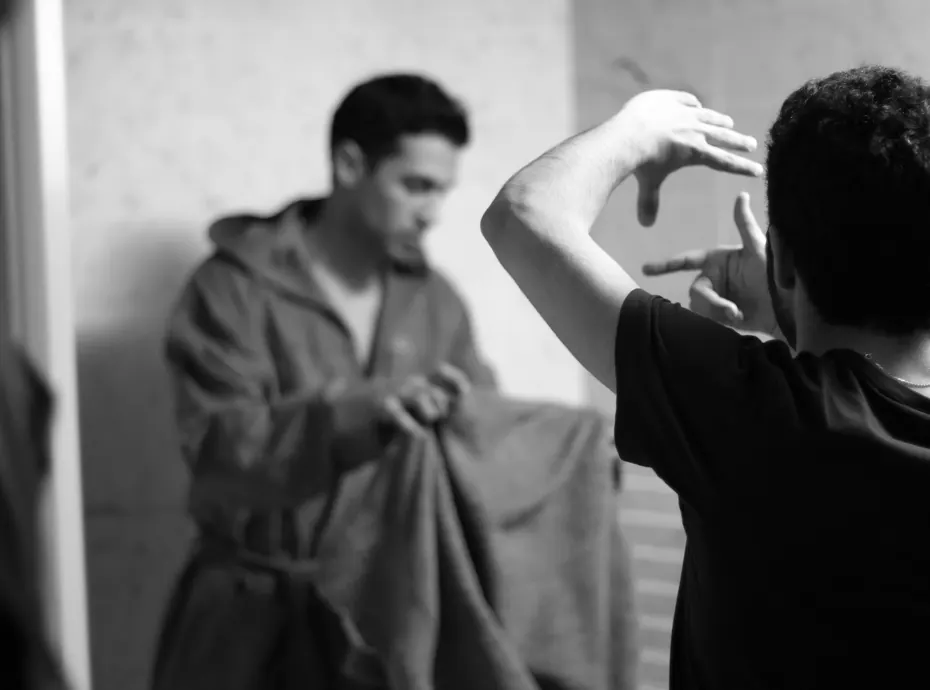
The director of photography is responsible for the entire visual aspect of the film: lighting, technical choices, framing, and colors. The camera operator operates the camera and composes each shot according to the director of photography’s instructions and those of the director. On a small production, the director of photography often does both.
Be careful with the terminology: in film, “chef opérateur” refers to the director of photography, while the sound engineer is responsible for sound recording. In television and news reporting, the term “camera operator” is more commonly used.
Who does the director of photography work with?
He works first with the director, bringing the director’s vision to life, and with the production designer, since set design and lighting go hand in hand. He leads the camera crew: the first assistant cinematographer, who is in charge of focusing, and the second assistant cinematographer.
He also consults with the production manager, since equipment and crew size have an impact on the budget, and with the colorist toward the end of the process.
What skills do you need to become a director of photography?
It requires a solid technical mastery of optics, exposure, colorimetry, digital cameras, and light sources. It also requires a deep understanding of the visual arts—including painting, photography, and film—to create lighting that serves the story.
Finally, the job requires leading a large team, making quick decisions when the lighting changes, and sticking to a tight schedule without compromising the quality of the footage.
How much does a cinematographer earn?
On a feature film, the minimum wage for a director of photography is €2,758.11 gross per week, based on a 39-hour workweek. This is the highest minimum wage in the technicians’ pay scale for a 39-hour workweek, tied with that of a second-unit director of photography.
| Post Office, Movie Theater | Minimum gross weekly pay, based on a 39-hour workweek | Low-Budget Film (Appendix III) |
|---|---|---|
| Director of Photography | 2 758,11 € | €1,556.00, plus €2,404.22 in revenue-sharing |
| Camera Operator | 1 747,82 € | €1,182.20, plus €1,131.26 |
| First assistant operator | 1 364,56 € | €1,040.39, plus €648.35 |
| Second Assistant Camera Operator | 1 070,37 € | €931.54, plus €277.67 |
These amounts are taken from the wage scale in the collective bargaining agreement for film production (IDCC 3097), effective as of May 1, 2026. For low-budget films listed in Appendix III, the wage is lower but is supplemented by a share of the film’s box office receipts. Television and advertising are subject to different rules.
The work is done on a film-by-film basis. For all film production occupations (ROME code L1505), France Travail reported 420 job openings over a 12-month period for 3,040 job seekers in the second quarter of 2026, and 97% of the hires were for fixed-term contracts lasting less than one month.
What kind of education do you need to become a cinematographer?
France Travail notes that careers in cinematography are accessible with a film and audiovisual-related degree ranging from a high school degree e to a three-year post- e degree. The typical career path then involves working on the camera crew—as a second assistant, first assistant, and sometimes as a camera operator—before taking on the cinematography for one’s first films, which are often short films and music videos.
At ESRA, the ESRA Cinema program is a three-year course of study leading to a state-recognized “ degree ” degree at the Bac+3 level, with more than 700 hours of instruction per year and at least two productions per year, which are screened for a jury. In the third year, the cinematography specialization focuses on mastering camera work, lighting, and framing. In January 2024, ESRA became the first film school in France to be certified as an ARRI Certified Film School and acquired five ALEXA 35 cameras.
What career opportunities and prospects are there?
Cinematographers work in film, television series, commercials, music videos, and documentaries, both in France and abroad. Many switch between formats: commercials and music videos allow them to experiment with visuals that feature films rarely permit.
Among ESRA alumni, Romain Lacourbas (ESRA 2001) served as director of photography for *John Wick: Ballerina*, *Rémi Without a Family*, and the series *Marco Polo*, while Kanamé Onoyama (ESRA 2007) served as director of photography for music videos by Ed Sheeran, Stormzy, and Franz Ferdinand.
Sources: Légifrance, IDCC 3097 collective bargaining agreement, pay scale as of May 1, 2026; France Travail, ROME code L1505; ARRI, press release dated January 30, 2024; Académie des César. Verified on September 29, 2026.
Frequently Asked Questions
What does a cinematographer do?
He works with the director to develop the visual style of a film: he selects the camera and lenses, designs the lighting for each scene, directs the camera, lighting, and rigging crews, and then oversees the color grading.
How much does a cinematographer earn?
For a feature film, the minimum wage is €2,758.11 gross per week, based on a 39-hour workweek, according to the pay scale set forth in the collective bargaining agreement for film production in effect as of May 1, 2026.
Are "director of photography" and "chief cameraman" the same job?
Yes, in the film industry, both terms refer to the same position. This should not be confused with the sound recordist, who is responsible for recording sound.
What is the difference between a director of photography and a camera operator?
The director of photography is responsible for the entire visual aspect of the film, including lighting. The camera operator operates the camera and frames the shots. On a small production, the director of photography often frames the shots himself.
What kind of education do you need to become a cinematographer?
According to France Travail, careers in cinematography are accessible with a degree ( degree ) ranging from a high school diploma (Bac) to a three-year post-secondary degree (Bac+3) in film and audiovisual studies. One then advances within the camera crew, from assistant to director of photography.
Is there a César Award for photography?
Yes. The César Award for Best Cinematography has been presented since the first ceremony in 1976.
The other cinema jobs

Director of Photography


Production and Distribution

Film Directing,
Series and TV
Programs offered at ESRA Paris
The school offers post-baccalaureate Programs in all three audiovisual fields. These Programs award a state-approved degree recognized by the French Ministry of Higher Education and Research.
Producer, Director, Editor
Audiovisual, Sound Systems, Music,
Radio, Video Games
Animation, 3D Compositing & VFX, Management & Production, Modeling
Master's-level Programs also on offer
Develop your technical and creative skills in the film industry with the Master DHEC, a state-approved degree .
To become a film producer, distributor, programmer, seller or buyer
Audiovisual, Live, Music,
Radio, Sound Design
DHEC Filmmaking
in English
To manage the entire production of a project: script writing, locations, casting...