
The stage assistant sets up, adjusts, and secures everything on a performance or film set: sets, platforms, props, sound and lighting equipment, and backline. They set up before the show, assist with changes during the performance, and take everything down afterward. In the collective bargaining agreement for private-sector performing arts companies, this role goes by another name: stage technician or stage foreman.
In a nutshell
- He sets up the set, manages it during the performance or filming, and then takes it down: that is the core job of a stage manager.
- “Stage assistant” is not an official job title: the collective bargaining agreement for the private performing arts sector refers to this role as a stage technician or stage foreman.
- The minimum gross monthly wage varies by location: from the minimum wage (SMIC), €1,867.02, in a concert hall with fewer than 300 seats, to €2,296.28 in a private theater with more than 500 seats.
- The career path involves starting as a stagehand, then moving on to stage manager, and finally becoming a production manager or technical director.
- No specific “ degree ” is required, but certifications are required on most sets: electrical work, working at heights, and operating aerial work platforms.
What does a set assistant do?
The stage assistant sets up the stage before the creative teams arrive, and then manages it during the performance or filming. His work consists of three stages.
During setup: Unloading the truck, setting up the set, installing the platforms and side curtains, hanging the structures, running cables, and setting up the backline. He works under the direction of the stage manager and in coordination with the sound and lighting technicians.
During the performance. Making on-the-spot changes, moving set pieces, handling props, and monitoring traffic and clearances. He must remain out of sight of the audience and within earshot of the control room.
During dismantling. Dismantling, packing away, loading, taking inventory, and reporting any damaged equipment, so that the next production run can begin without any surprises.
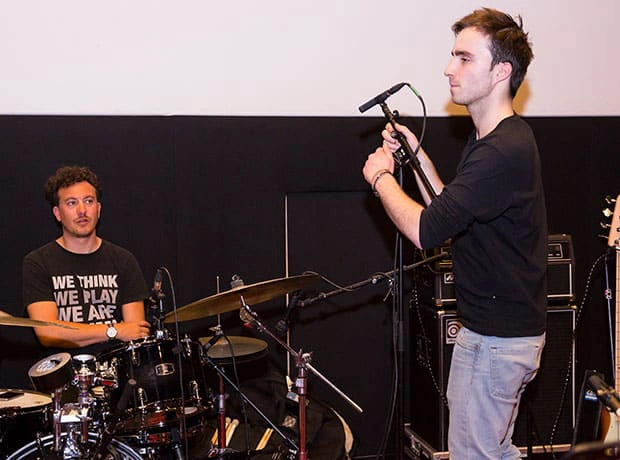
Set assistant for live performances, television, or film?
This profession is found primarily in live performance and on television sets. In film, the same work is divided among separate roles.
In a theater, at a festival, or at a technical service provider’s facility, the stage assistant is covered by the collective bargaining agreement for private-sector performing arts companies. On a television set, the role is known as a set assistant, as listed in the job classifications for audiovisual production and television broadcasting. On a film set, there is no such role as “stage assistant”; the work is performed by stagehands, electricians, and prop masters, who are covered by the collective bargaining agreement for film production. This is why pay scales cannot be directly compared across sectors.
Set Assistant, Stagehand, Stage Manager: What's the Difference?
All three work on set, but they do not have the same level of responsibility: the set assistant carries out tasks, the stagehand is a qualified machinery technician, and the stage manager leads the team and is responsible for safety.
| Function | What She Does | Position |
|---|---|---|
| Set Assistant (Set Technician) | Assemble, operate, and disassemble the platform; handle accessories and changes | Performance, under the direction of the stage manager |
| Machinist | Machinery, sets, structures, rigging, and lifting | Qualified technician, one level higher in concert halls, at the same level in private theaters |
| Stage Manager | Leads the set crew, plans the set-up, and is responsible for safety | Supervisor |
| stage manager | Coordinates all of the show's technical teams | Frame |
How much does a set assistant earn?
The minimum wage depends on the type of performance and the size of the venue. The collective bargaining agreement for private-sector performing arts companies (IDCC 3090) does not recognize the title “stage assistant”; it refers to “stage technician” or “brigadier” in concert halls, and establishes a wage scale for each type of performance.
| Workplace | Gross hourly rate | Gross monthly pay, 151.67 hours |
|---|---|---|
| Private theater with up to 500 seats (Appendix 1) | 13,11 € | 1 988,39 € |
| Private theater with more than 500 seats (Appendix 1) | 15,14 € | 2 296,28 € |
| Concert hall with fewer than 300 seats (Appendix 2) | €12.20, adjusted to the minimum wage: €12.31 | €1,850.37, adjusted to the minimum wage: €1,867.02 |
| Concert hall with more than 300 seats (Appendix 2) | 12,82 € | 1 944,41 € |
| Tour Concert (Appendix 2) | 13,71 € | 2 079,40 € |
As of June 1, 2026, the minimum wage (SMIC) is €12.31 per hour, or €1,867.02 per month. The pay scale for concert venues with fewer than 300 seats has fallen below this threshold; therefore, the minimum wage applies. This is also the case for the collective bargaining agreement’s standard pay scale, which sets the hourly wage for stage technicians at €12.01.
These amounts are taken fromthe July 21, 2025, amendment to the collective bargaining agreement’s minimum wages, which has been in effect since September 1, 2025, and was extended by a decree dated February 17, 2026. These are minimum thresholds. In practice, work in this field is almost always performed on an intermittent basis: according to France Travail, 97% of hires in the machinery trades (ROME code L1506) are fixed-term contracts lasting less than one month (data from Acoss and MSA, third quarter of 2025), and 80% of job postings offer between €1,802 and €2,308 gross per month.
The subsidized sector is covered by a different collective bargaining agreement—the one for arts and cultural organizations (IDCC 1285)—which has its own pay scales. Always check which one is listed on your contract.
What kind of education do you need to become a production assistant?
No specific “ degree ” certification is legally required: it is the crew’s certifications and experience that open doors. Most employers require, at a minimum, an electrical certification, training in working at heights, and—for construction sites—a certification to operate aerial work platforms.
There are three paths to becoming a stage technician. The technical track—a CAP or vocational baccalaureate in electrical engineering or digital systems, supplemented by relevant certifications. The audiovisual track—a BTS in audiovisual professions. And the sound track—for those aiming for sound engineering and sound reinforcement rather than stage machinery.
ESRA does not prepare students for a career as a stage technician in the strict sense. However, the ESRA Sound program—a three-year program following the baccalaureate and a degree e recognized by the government—covers sound for live performances and events: sound reinforcement, monitor systems, and sound control room operations. This is the most common entry point onto a stage for someone with a sound background, and it leads on to roles such as stage manager.
What are the working conditions and what qualities are required?
This job involves irregular hours, shift work, and lifting heavy loads: that’s the first thing you need to know before taking it on.
Setup begins early, takedown ends late, tours move from city to city, and contracts are typically fixed-term. The work is physically demanding and must be performed under constant safety requirements: protective gear, checking of rigging, and adherence to weight limits.
In terms of qualifications, we expect meticulousness in organizing and locating equipment, composure during set changes, a team-oriented attitude, and complete discretion on stage. A driver’s license and a good command of technical English significantly broaden the range of opportunities, particularly on international tours.
What career opportunities and prospects are there?
A stage assistant progresses to stagehand, then stage manager, and finally stage manager or technical director. It’s a profession where advancement comes from on-set experience, not from degrees.
Employers include venues and theaters, festivals, technical service providers, touring companies, television sets, and studios. Demand varies by season: it is high from September through June and low in the summer, except during festivals.
In terms of official classification, this profession falls under ROME code L1506, “performance machinery,” and supervisory roles fall under code L1509, “stage management.” These codes serve as a reference for proposals and funded pro Programs .
Sources: Légifrance, IDCC 3090 collective bargaining agreement, amendment of July 21, 2025, common provisions, and Appendices 1 and 2; minimum wage as of June 1, 2026; France Travail, ROME code L1506, and list of job functions in Appendix 8. Verified on September 24, 2026.
Frequently Asked Questions
What is a set assistant?
This is the technician who sets up, operates, and dismantles the stage for a performance or film shoot: sets, platforms, props, and sound and lighting equipment. The collective bargaining agreement for the private performing arts sector refers to this role as a stage technician or foreman.
How much does a set assistant earn?
It depends on the venue. In a private theater with a capacity of 500 seats or fewer, the minimum wage for a stage technician is €1,988.39 gross per month for 151.67 hours, and €2,296.28 for hours beyond that. In a concert hall, the rate is €1,944.41 for venues with more than 300 seats and €2,079.40 on tour. For venues with fewer than 300 seats, the pay scale falls below the minimum wage (SMIC); therefore, the minimum wage—€1,867.02—applies.
What kind of training is required to become a set assistant?
No specific high school diploma ( degree ) is required. What matters are the certifications: electrical certification, working at heights certification, and aerial work platform operation certification. For those interested in sound engineering, the ESRA Sound program—a three-year program following the baccalaureate—covers sound reinforcement and sound engineering for live performances.
What is the difference between a set assistant and a stagehand?
The stage assistant is responsible for setting up and maintaining the stage. The stagehand is a qualified technician specializing in machinery, sets, and structures: he is one pay grade higher on the pay scale, at €1,906.49 compared to €1,821.56.
Does a set assistant work in film or in live performance?
Especially in live performances and on television sets. In film, the same work is divided among stagehands, electricians, and prop masters, who are covered by a different collective bargaining agreement—the one for film production.
What career paths are open to a production assistant?
From stagehand to stage manager, then to production manager or technical director. The minimum wages range from €1,821.56 to €2,115.80 for a stage manager and €2,658.78 for a management position.
The other cinema jobs

Audiovisual


Live


Programs offered at ESRA Paris
The school offers post-baccalaureate Programs in all three audiovisual fields. These Programs award a state-approved degree recognized by the French Ministry of Higher Education and Research.
Producer, Director, Editor
Audiovisual, Sound Systems, Music,
Radio, Video Games
Animation, 3D Compositing & VFX, Management & Production, Modeling
Master's-level Programs also on offer
Develop your technical and creative skills in the film industry with the Master DHEC, a state-approved degree .
To become a film producer, distributor, programmer, seller or buyer
Audiovisual, Live, Music,
Radio, Sound Design
DHEC Filmmaking
in English
To manage the entire production of a project: script writing, locations, casting...


