To become a sound engineer, you need at least two years of post-secondary education in sound, according to Onisep: a BTS in audiovisual professions with a specialization in sound, a professional bachelor’s degree, a private school, or—after two or three years of study—a national school requiring an entrance exam. The profession is practiced in film, television, radio, music studios, at concerts, or in the video game industry, most often under the status ofa freelance entertainment worker.
This guide provides an overview of careers, education, admission requirements, temporary work, and minimum wages, with figures verified at the source.
Two years of post-secondary education
The minimum educational requirement for the profession, according to Onisep. The required degrees ( Programs ) range from a BTS to a master’s degree.
Not a title
"Sound engineer" is a job title, not a degree in engineering.
507 hours
Over 12 months: the threshold for receiving compensation as a freelance technician.
1 930 €
The minimum gross weekly wage for a film sound engineer (2024 pay scale).
Table of Contents
- What does a sound engineer do?
- What kind of education do you need to become a sound engineer?
- The BTS in Audio Technology
- National Schools with Entrance Exams
- College: Professional Bachelor's Degree and Master's Degree
- How to Choose an Audio Production Course
- Intermittent Work and Wages
- Required Qualifications
- What about ESRA Son?
- Frequently Asked Questions
What does a sound engineer do?
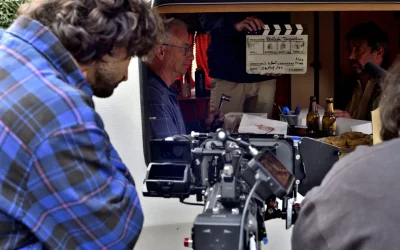
According to Onisep, a sound engineer “ensures the sound quality” of a film, an album, a concert, or a performance. They select the equipment, assess the venue’s acoustics, position the microphones, record, and then adjust and mix the audio. On large projects, they lead a technical team.
The term “engineer” does not refer here to a “ degree.” Only the title of “diplômé d’ingénieur” is protected, and it is awarded by accredited schools based on the recommendation or decision of the Commission des titres d’ingénieur (CTI). The “ Programs ” programs lead to BTSs, bachelor’s degrees, school diplomas, or master’s degrees, but not to this title.
The term “sound engineer” encompasses several different roles, depending on the sector and the stage of production:
| Occupation | What he does | Where |
|---|---|---|
| Sound Director | Records sound during filming and directs the on-set sound crew | Movies, TV dramas |
| Perchman | Holds the boom pole and positions the microphone as close as possible to the actors | Filming |
| Sound Editor | Edit the dialogue, background sounds, and sound effects after filming | Post-production |
| Mixer | Balance vocals, music, and ambient sounds for the final version | Movies, television |
| Studio Sound Engineer | Records and mixes musicians or vocals | Music Studios |
| Front of house sound engineer | Controls the sound played for the audience during a concert | Concerts, festivals |
| Implementation Technician | Handles the sound for a live radio broadcast | Radio |
| Sound designer | Creates soundscapes based on a set of specifications | Video games, advertising, movies |
What kind of education do you need to become a sound engineer?
You can start right after high school, in a BTS program or at a private school. Public schools admit students later, after two or three years of higher education. In any case, practical experience counts: studio hours, film shoots, and internships.
| Track | Duration | Admission | Cost | degree |
|---|---|---|---|---|
| BTS in Audiovisual Professions, Sound Technology Track | 2 years | Parcoursup: based on application materials; sometimes includes tests or an interview | Free admission for the general public | Two years of post-secondary education |
| Professional Bachelor's Degree in Sound and Visual Technology | 1 year after completing a two-year post-secondary program | According to the university | College Tuition | Bachelor's degree |
| Master's degree at the university | 2 years after earning a bachelor's degree | Based on application materials, depending on the university | College Tuition | 5 years of post-secondary education |
| ENS Louis-Lumière, Master's in Sound | 3 years after completing a two-year post-secondary program | Contest, for people under 27 | €300 in registration fees per year | Master's degree |
| La Fémis, Sound Department | 4 years after two years of study | Contest, for people under 27 | €458 per year, according to Onisep | Master's degree |
| Private school | Generally, 3 years after graduating from high school | Variable: entrance exam, application, Parcoursup for the targeted degrees | Paid | Variable: Check the degree |
The BTS in Audio Technology
The BTS in Audiovisual Professions, with a specialization in sound, is a two-year program offered at high schools or through apprenticeships, and includes 11 weeks of internship. Onisep lists 45 institutions, both public and private. Admission is handled through Parcoursup, based on an application, and may include tests or an interview. Some institutions require musical experience.
Spots are scarce. At Lycée Suger in Saint-Denis, the program received 1,075 applications in 2025 for 13 spots, according to its Parcoursup profile. Early in one’s career, people typically start out as sound assistants, sound recordists, or sound engineers. One can also pursue a professional bachelor’s degree or take a competitive exam.
National Schools with Entrance Exams
Three public institutions offer master's-level programs in music. They do not admit students directly after high school, and their entrance exams are highly selective.
- ENS Louis-Lumière, Master’s in Sound: 3 years, 16 students per year. Admission is open to applicants who have completed two years of post-secondary education and are under 27 years of age. The application process includes a portfolio featuring an original sound design, a written exam in mathematics and physics, a multiple-choice test on electricity and electronics, followed by oral exams. Tuition is free; only a registration fee is required, which will be €300 for the 2025–2026 academic year.
- La Fémis, Sound Department: 4-year program; 6 students admitted to the Sound program in 2026. The admissions exam requires two years of higher education and applicants must be under 27 years of age. For the 2027 admissions exam, registration opens on December 8, 2026.
- Paris Conservatory (CNSMDP), advanced training in sound-related professions: this program is designed for musicians. The conservatory requires a two-year post-secondary degree in a science-related field for the first cycle, or a three-year post-secondary degree for the second cycle, and a conservatory-level music qualification (DEM).
College: Professional Bachelor's Degree and Master's Degree
The professional bachelor's degree in sound and image technology is a one-year program for students who have completed two years of post-secondary education, and is offered at 15 institutions, according to Onisep. It is particularly popular among BTS graduates.
At the master’s level, the University of Western Brittany in Brest offers a master’s degree in image engineering and sound engineering, with a specialization in image and sound. Admission requires a bachelor’s degree (L3) in engineering sciences with a specialization in image and sound, or an equivalent degree, and is based on an application and an interview.
How to Choose an Audio Production Course
The best way to learn about sound is through practice. Before making a decision, ask these six questions—both at the school and to its students. To understand the value of a degree, read our article on the differences between degree visé, grade, and RNCP certification.
The degree
degree National, “ degree ” accredited by the government, RNCP certification, or school “ degree ”?
Hours
How many hours of classes per year, and what percentage of that time is spent in the studio or on set?
Equipment
Which studios, which consoles, which mixing suites—are they open to the public or not?
Speakers
Who teaches: professionals currently working in the field, and in which sectors?
Internships
How many weeks, when, and what kind of help is needed to find them?
The cost
What are the annual costs, what scholarships are available, and does the CROUS apply?
An open house gives you the chance to tour the studios, listen to student work, and ask these questions in person.
Intermittent Work and Wages
Most sound engineers work on short-term contracts under the “intermittent du spectacle” status. To be eligible for benefits between contracts, a technician must haveworked at least 507 hours during the 12 months preceding the end of their last contract, according to France Travail. Technicians fall under Appendix 8 of the unemployment insurance system. The rules are detailed in our article on the “intermittent du spectacle” status.
In the film industry, the collective bargaining agreement sets a minimum workweek of 39 hours. According to the schedule in effect since March 1, 2024, these are:
| Function | Minimum gross weekly pay |
|---|---|
| Film Mixer | 2 110,45 € |
| Film Sound Engineer | 1 930,06 € |
| Head Film Sound Editor | 1 656,25 € |
| First Assistant Sound Engineer for Film | 1 278,27 € |
These are minimum amounts per week worked, not monthly salaries. Annual income depends on the number of weeks in the contract. Outside the film industry, the range is lower: for 80% of sound technician job postings on France Travail, the salary ranges from €1,802 to €2,300 gross per month. Onisep reports a gross monthly salary of €2,600 for an entry-level sound engineer on a permanent contract.
Required Qualifications
Onisep lists a solid foundation in acoustics, proficiency with analog and digital tools, a good ear, and a broad musical background as key requirements. Playing an instrument is valued and even essential. The job also requires the ability to listen and exercise diplomacy, both with artists and with the team.
You must be willing to work irregular hours, including evenings and weekends, travel—sometimes frequently—and handle heavy equipment. Being a freelance worker also means you have to seek out your own contracts.
What about ESRA Son?
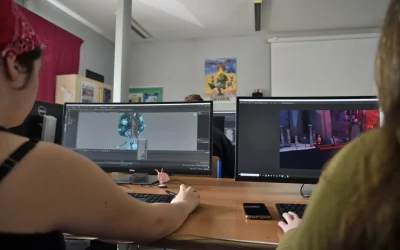
ESRA Son offers a three-year program following high school graduation in the field of sound: music, recording, sound design, mixing, video games, radio, and event production. Each student completes more than 750 hours of instruction per year, including lectures, hands-on exercises, and supervised production projects, and chooses a specialization in the third year.
The program leads to the DESTS ( degree ) in Sound Engineering, a state-accredited three-year post-baccalaureate degree (RNCP 41243) offered in Paris, on the French Riviera, and in Rennes. Admission to the first year is through Parcoursup and the school’s entrance exam, which is open to all high school graduates, regardless of academic record. Tuition for the 2027–2028 academic year ranges from €9,000 to €9,650 per year, depending on the campus.
The program, majors, and campuses
The State Visa and the Admission Process
Upcoming dates at each campus
Frequently Asked Questions
Do you need an engineering degree e to become a sound engineer?
No. “Sound engineer” is a job title. Only the title of “engineer” (requiring a degree) is protected, and sound- Programs s offer BTS programs, bachelor’s degrees, school diplomas, or master’s degrees. According to Onisep, the minimum educational requirement to practice in this field is two years of post-secondary education.
What high school track should you take to become a sound engineer?
For the BTS in Audio Technology, Onisep recommends a general baccalaureate, a STI2D baccalaureate with a specialization in SIN, or an STL baccalaureate with a specialization in SPCL. National schools admit students after two or three years of higher education. At ESRA, the admissions exam is open to students with any type of baccalaureate.
How much does a sound engineer earn?
In the film industry, the minimum wage for a sound engineer is €1,930.06 gross per 39-hour workweek, according to the pay scale in effect since March 2024. This is the minimum for each week worked; annual income depends on the number of contracts. Onisep reports a gross monthly salary of €2,600 for an entry-level employee on a permanent contract.
How long does the program last?
Two years for a BTS, three years for a professional bachelor’s degree or a private school program after the baccalaureate, and five years or more for a master’s degree. At ENS Louis-Lumière, the master’s program lasts three years after two years of post-secondary study.
Do you have to play an instrument?
It is not mandatory everywhere, but Onisep considers playing a musical instrument to be valuable, if not essential. Some BTS programs require musical experience, and the sound engineering program at the Paris Conservatory requires a conservatory-level proficiency.
Sources
- Onisep, Career Profile: Sound Engineer
- Onisep, the engineering degree
- Onisep, BTS in Audiovisual Professions, Sound Technology Track
- Parcoursup, BTS program description for Suger High School (Saint-Denis)
- Onisep, Professional Bachelor's Degree in Sound and Image Technology
- ENS Louis-Lumière, Master's in Sound
- La Fémis, the entrance exams
- Paris Conservatory, Training in Audio Professions
- France Travail, the system for intermittent workers
- France Travail, Sound Technician Profile
- Collective Bargaining Agreement for Film Production (IDCC 3097), wage agreement for technical staff dated January 23, 2024, extended by executive order dated October 3, 2024